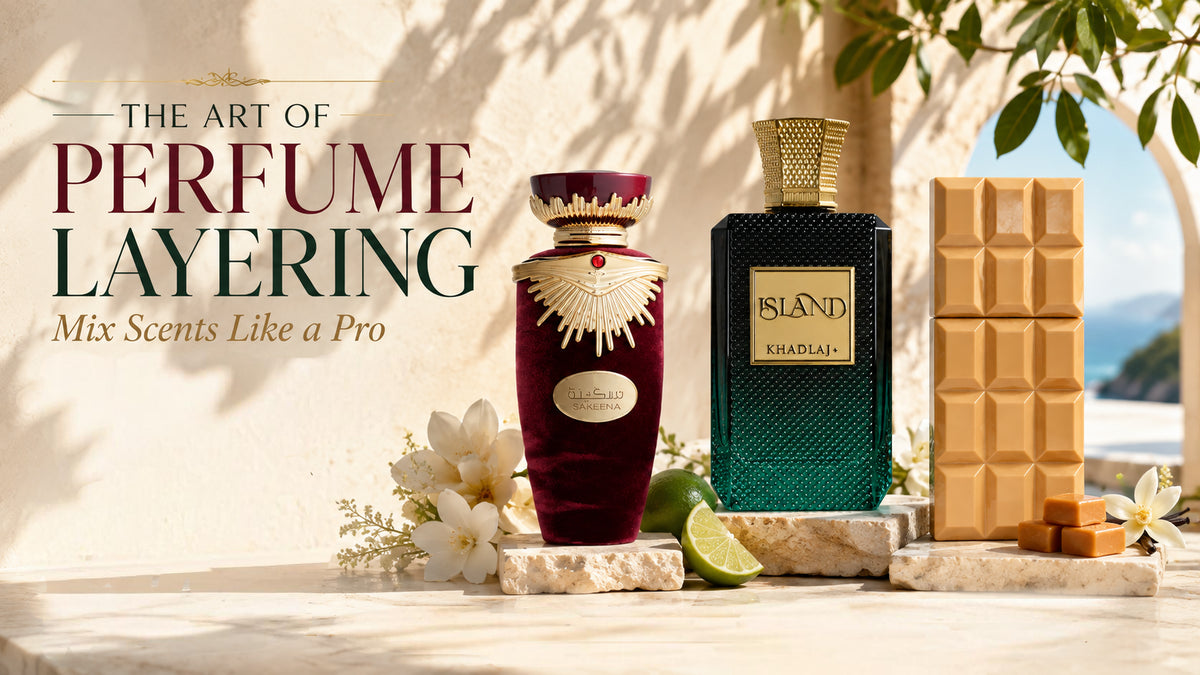
Perfume layering sounds like something only a fragrance nerd would bother with, but it's really just a simple trick: wearing two or more scents together so they blend into something that smells more like you than any single bottle could. Done right, perfume layering stretches your existing collection instead of forcing you to buy something new every season, and it's how a lot of people end up with a signature scent nobody can quite place. This isn't about mixing bottles at random and hoping for the best there's a logic to it, and once you get it, it's hard to go back to wearing one fragrance at a time.
What Perfume Layering Actually Means
At its simplest, perfume layering is applying more than one fragrance to your skin, or one on skin and one on clothes, so the scents mix as they wear down. It's not the same as spraying two random bottles and hoping they get along. The idea is to use one fragrance as a base and another as an accent something that adds complexity without fighting the first scent for attention. Perfumers already do a version of this inside a single bottle, building top, heart, and base notes that shift over a few hours. Layering just lets you take that same idea and build it yourself, using two or three fragrances instead of one.
How to Layer Fragrance Without Overdoing It
If you're new to this, the easiest way to learn how to layer fragrance is to start with two scents that already share a note a vanilla and a warm amber, for instance, or two things with citrus in the opening. Apply the heavier, more complex scent first, usually on pulse points like the wrists and neck, then wait a minute or two before adding the lighter one on top, maybe at the collarbone or on clothing instead of skin. Spraying both at once tends to create a muddy blend where neither scent gets to shine. Two sprays of each is usually plenty this is one of those situations where less genuinely works better, since layering intensifies both scents rather than diluting either one.
Scent Combination Tips That Actually Work
Some pairings are close to foolproof. A woody fragrance under a floral top note almost always works, since the wood acts like a base the flowers can sit on top of. Citrus and vanilla is another safe combination the citrus keeps a sweet scent from feeling heavy, and the vanilla stops the citrus from fading too fast. Spicy fragrances pair well with anything musky, and a clean, soapy scent can be layered under almost anything as a kind of neutral base. One of the more useful scent combination tips is to layer within the same brand or fragrance family first, since perfume houses often design their lines to share a base accord on purpose, which makes early experiments a lot more forgiving before you branch out to different brands entirely.
Mistakes to Avoid
The biggest mistake is layering two equally strong, equally complex fragrances and expecting them to just get along usually one drowns out the other, or they clash in a way that's hard to undo without a shower. Skip anything with a dominant, unusual note, like a strong oud or a heavy leather, when you're layering for the first time, since those tend to overpower whatever you pair them with. Give a combination a full wear before deciding it doesn't work, too. Fragrance changes a lot in the first twenty minutes on skin, and a pairing that seems overwhelming at first spray can settle into something far more balanced an hour later which is part of what makes perfume layering worth practicing rather than judging on the first try.